Austrian Gold Philharmonic Coins
Keep your investments secure
About the Austrian Gold Philharmonic Coins
Available in 1/10 oz, 1/4 oz, 1/2 oz, and 1 oz, the Gold Vienna Philharmonic was first introduced on October 10, 1989, by the Austrian Mint. Struck from .9999 pure gold, it quickly gained recognition as one of the world’s leading bullion coins and remains a top choice among investors and collectors. Celebrating Austria’s rich musical heritage, its design features the Great Organ of Vienna’s Golden Hall on the obverse and a collection of orchestral instruments on the reverse. With its combination of investment-grade purity, cultural artistry, and international recognition, the Austrian Philharmonic gold coin continues to enhance any coin collection.
Austrian Gold Philharmonic Coins Design & Features
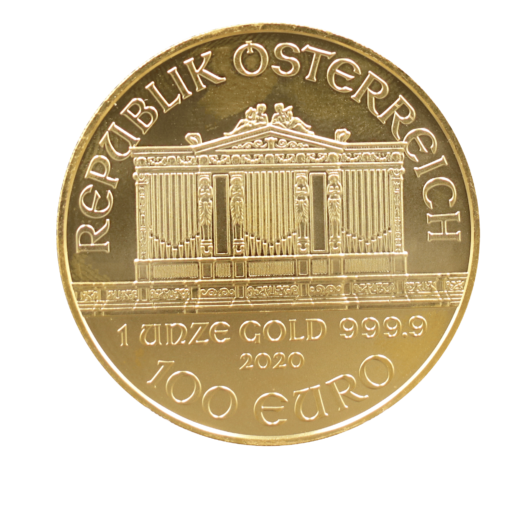
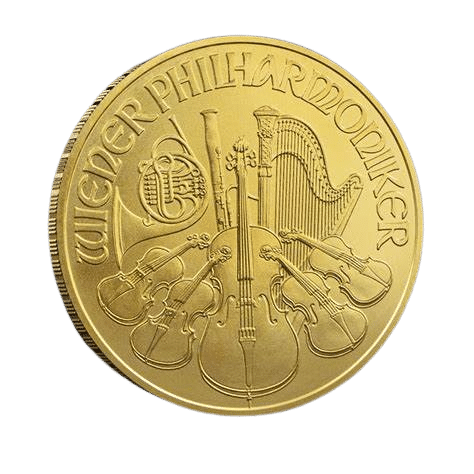
The design of the Austrian Philharmonic Gold Coin pays tribute to Vienna’s world-renowned musical tradition. The obverse showcases the Great Organ of the Golden Hall in Vienna’s Musikverein, where the famous Philharmonic Orchestra performs. The reverse features an elegant arrangement of orchestral instruments, including the cello, violin, harp, bassoon, and Vienna horn, symbolizing harmony and cultural pride. Struck from .9999 fine gold, this coin combines exceptional purity with timeless artistry, making the Austrian Philharmonic Gold Coin both a reliable investment and a celebrated work of numismatic design.
Obverse Inscriptions And Characteristics
The obverse of the Austrian Philharmonic Gold Coin highlights the majestic Great Organ located in Vienna’s Golden Hall, home to the famed Philharmonic Orchestra. This design choice reflects Austria’s deep cultural ties to classical music and its international reputation for excellence in the arts. Surrounding the organ are inscriptions noting the coin’s purity, weight, denomination, and year of issue, underscoring both its artistic and monetary significance.
Reverse Inscriptions And Characteristics
On the reverse, a beautifully detailed arrangement of orchestral instruments represents the harmony and tradition of the Vienna Philharmonic. Featuring the cello, violins, harp, Vienna horn, and bassoon, the design embodies unity and musical brilliance. This unique combination of artistry and symbolism makes the Austrian Philharmonic gold coin stand out not only as an investment-grade bullion piece but also as a celebration of Austria’s cultural heritage.
COIN SPECS
COIN WEIGHTS
- Mint Austrian Mint (Münze Österreich)
- Dates in Use 1989 – Present
- Purity .9999 fine gold
- Weight Varies by size
- Diameter 37.0 mm
- Thickness 2.0
- Obverse Great Organ of the Golden Hall in Vienna’s Musikverein
- Reverse Array of orchestral instruments
- Face Value €4, €10, €25, €50 and €100
1/25 Troy Ounce
1/10 Troy Ounce
1/4 Troy Ounce
½ Troy Ounce
1oz Troy Ounce
Highlights & Specs
In 1989 when it was first produced, it only came in two denominations (1oz and 1/4oz). Three more denominations, 1/2oz, 1/10oz, and 1/25oz, were added in 1994, 1991, and 2014 respectively. The Austrian Philharmonic gold coin has enjoyed glorious times as it first shot itself to prominence in 1990 when it became the bestselling coin in Europe and the second best in the whole world. In some years, it was actually the bestselling coin in the world. The Philharmonic coin is one of the few coins to have their face values in Euros, with the 1/25oz, 1/10oz, 1/4oz, 1/2oz, and 1oz denominations all having face values of €4, €10, €25, €50, and €100 respectively.
Understanding the Value
The Austrian Philharmonic gold coin is valued for both its exceptional .9999 fine gold purity and its status as one of the world’s most recognized bullion coins. Its legal tender backing by the Austrian government ensures trust, while its Euro-denominated face value makes it unique among global bullion issues. Beyond its intrinsic gold content, the coin’s elegant design celebrating Vienna’s musical heritage enhances its appeal to collectors. With certain years and fractional sizes commanding premiums due to demand and limited mintages, the Philharmonic continues to hold strong value as both a secure investment and a cultural icon.
COIN WEIGHTS
- Mint Austrian Mint (Münze Österreich)
- Dates in Use 1989 – Present
- Purity .9999 fine gold
- Weight Varies by size
- Diameter 37.0 mm
- Thickness 2.0
- Obverse Great Organ of the Golden Hall in Vienna’s Musikverein
- Reverse Array of orchestral instruments
- Face Value €4, €10, €25, €50 and €100
COIN SPECS
- 1/25 Troy Ounce
- 1/10 Troy Ounce
- 1/4 Troy Ounce
- ½ Troy Ounce
- 1oz Troy Ounce
Highlights & Specs
In 1989 when it was first produced, it only came in two denominations (1oz and 1/4oz). Three more denominations, 1/2oz, 1/10oz, and 1/25oz, were added in 1994, 1991, and 2014 respectively. The Austrian Philharmonic gold coin has enjoyed glorious times as it first shot itself to prominence in 1990 when it became the bestselling coin in Europe and the second best in the whole world. In some years, it was actually the bestselling coin in the world. The Philharmonic coin is one of the few coins to have their face values in Euros, with the 1/25oz, 1/10oz, 1/4oz, 1/2oz, and 1oz denominations all having face values of €4, €10, €25, €50, and €100 respectively.
Understanding the Value
The Austrian Philharmonic gold coin is valued for both its exceptional .9999 fine gold purity and its status as one of the world’s most recognized bullion coins. Its legal tender backing by the Austrian government ensures trust, while its Euro-denominated face value makes it unique among global bullion issues. Beyond its intrinsic gold content, the coin’s elegant design celebrating Vienna’s musical heritage enhances its appeal to collectors. With certain years and fractional sizes commanding premiums due to demand and limited mintages, the Philharmonic continues to hold strong value as both a secure investment and a cultural icon.
Frequently Asked Questions
Is The Austrian Philharmonic Gold Coin A Good Investment?
| Yes, the Austrian Philharmonic gold coin is struck from .9999 fine gold, making it one of the purest bullion coins available. Its global recognition, legal tender status in euros, and liquidity make it a reliable choice for both long-term investors and collectors. |
Why Does The Austrian Philharmonic Gold Coin Have A Face Value In Euros?
| The Philharmonic is one of the few bullion coins in the world denominated in euros, reflecting its issue by the Austrian Mint. This unique feature adds to its international appeal and distinguishes it from other bullion coins like the American Eagle or Canadian Maple Leaf. |
Do Certain Years Of The Austrian Philharmonic Gold Coin Carry Higher Premiums?
Yes, while all Philharmonic coins hold intrinsic value tied to gold, some years and fractional sizes are produced in smaller mintages. These can command higher premiums among collectors, especially when preserved in uncirculated condition. |
Gold Coins Available for Purchase
The American Gold Eagle, introduced in 1986, is primarily gold but includes small amounts of silver and copper for added durability.
The 1854 Kellogg $20 coin, born from the California Gold Rush, is a rare collector’s piece and a notable part of American history.
The Austrian Gold Philharmonic, first minted in 1989, was created to honor the Vienna Orchestra—reflected in its distinctive musical-themed designs.
The Australian Gold Kangaroo, first introduced in 1986, is widely regarded as a benchmark for craftsmanship and quality in modern bullion coins.
The Canadian Gold Maple Leaf is among the world’s purest coins, featuring 99.9999% gold—and even higher purity in special editions.
If the remarkable beauty of the Perth Mint 1oz Gold Bar does not first attract one, the security and authenticity feature is sure to make one’s head turn.
Questions?
Keep your investments secure