


 Skip to content
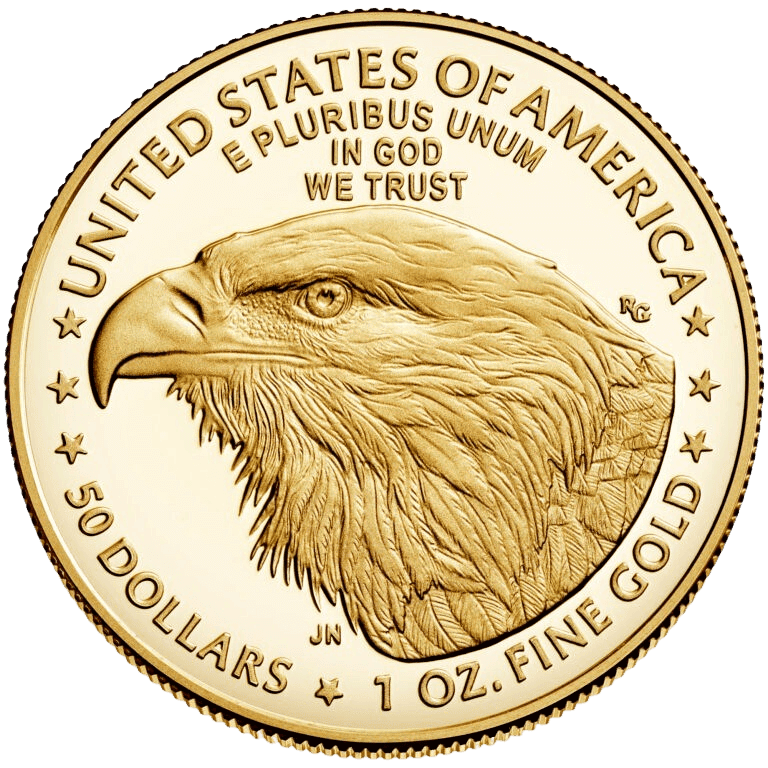





The American Gold Eagle Coins come in different denominations and versions. The denominations include 1/10oz, 1/4oz, 1/2oz, and 1oz, each
having a face value of $5, $10, $25, and $50, respectively. These denominations are named after the amount of gold content in the coins, meaning
that 1/10oz contains 0.1 ounces of gold, 1/4oz contains 0.25 ounces of gold, 1/2oz contains 0.5 ounces of gold, and 1 oz contains an ounce of gold.
The two versions of the American Gold Eagle coin are proof and bullion. While the bullion version was produced for the general populace, the proof
version was explicitly produced for coin collectors who keep them for personal effects and archival purposes. Apart from their face values, the Gold Eagle Coins also possess intrinsic values in the precious metal market. These two values are different from each other, as their face values are far lesser than their intrinsic values. The 1oz denomination, which has a face value of $50, for instance, had intrinsic value of $1,835 in the precious metals market in 2012.
The American Gold Eagle has a relatively modern origin, but its design roots trace back more than a century. The coin was first introduced in 1986 following the passage of the Gold Bullion Coin Act of 1985, which authorized the U.S. government to produce official gold bullion coins for investors. Production is handled by the United States Mint, using gold sourced primarily from domestic mines, which was a key requirement written into the original legislation.
While the coin itself is modern, its artistic heritage is deeply historical. The obverse design comes from the iconic 1907 $20 Double Eagle created by renowned sculptor Augustus Saint‑Gaudens at the request of President Theodore Roosevelt, who wanted to elevate the beauty of American coinage. This design is widely considered one of the most beautiful in U.S. history, and its revival on the Gold Eagle connects the coin to a golden era of American artistry and economic expansion.
On the head of the coin is an engraving of Lady Liberty in her full length, holding a torch in her right hand to symbolize light, and an olive branch in her left, to symbolize peace. Lady Liberty’s hair and robe flow freely as she walks forward from the capital. The coin’s obverse design was inspired by Augustus Saint-Gaudens’ 1907 $20 gold “Double Eagle” coin. “Liberty” and the year can be seen engraved into the obverse side of the coin.
The original tail of the coin was engraved, featuring a family of bald eagles. The male eagle carried an olive branch in its talons as it returned to the nest. The mother eagle hovered over the hatchlings, guarding her children. It was designed by Miley Bulsiek and was used from the beginning of the American Gold Eagle coin program in 1986 until 2021.
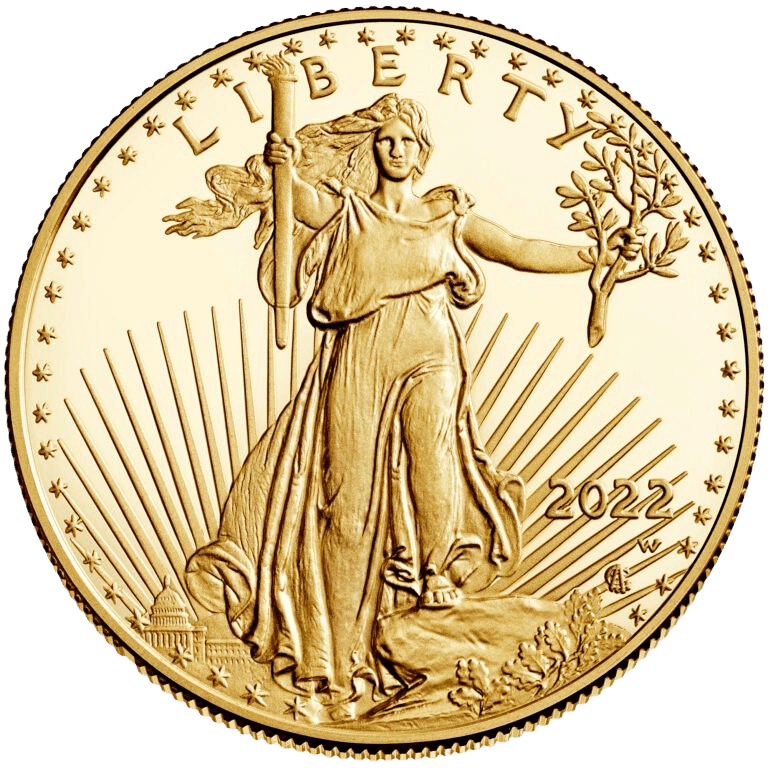
In 2021, to mark the coin’s 35th anniversary, the United States Mint sought out the talents of artist Jennie Norris to create a brand-new reverse side design.
The new design shows the head of a bald eagle featuring its left profile. Its eyes pierce right through to the viewer. Norris highlighted the eagle’s features in great detail, going as far as distinguishing between the different head and body feathers.
The coin is engraved with “United States of America,” “E Pluribus Unum,” and “In Gold We Trust” above the eagle. The bottom of the coin includes “50 Dollars” to show the face value of the coin and “1 oz Fine Gold.” The coins with fractional ounces feature their respective face values and weights.
Both the original and new designs were specifically chosen as they stand for all the values that are most highly upheld in the country; justice, liberty, and peace.
The American Gold Eagle coin is produced in four sizes, 1 oz, ½ oz, ¼ oz, and 1/10 oz, each with its own diameter, weight, and face value specifications:
The 1 oz coin is 1.287 inches in diameter, weighs 1.09 troy ounces, and has a $50 face value.
The ½ oz coin is 1.06 inches in diameter, weighs 0.55 troy ounces, and has a $25 face value.
The ¼ oz coin is .866 inches in diameter, weighs 0.27 troy ounces, and has a $10 face value.
The 1/10 oz coin is .65 inches in diameter, weighs 0.11 troy ounces, and has a $5 face value.
Each coin, no matter the weight, has a 91.67% gold, 3% silver, and balance copper with a reeded edge composition.
The American Gold Eagle derives its core value from its gold content, with one troy ounce of .9167 fine gold giving it intrinsic worth that moves directly with the global gold market. Struck by the United States Mint and backed by the U.S. government, the coin carries legal tender status and is widely recognized by dealers and investors worldwide, supporting strong liquidity and resale potential. Its additional value comes from iconic design elements, with the obverse featuring Augustus Saint‑Gaudens’ Lady Liberty and the reverse showcasing a striking bald eagle, combined with trusted provenance, precise minting, and durable alloying, making the American Gold Eagle a secure and highly respected choice for investors seeking exposure to physical gold.
The American Gold Eagle coin is produced in four sizes, 1 oz, ½ oz, ¼ oz, and 1/10 oz, each with its own diameter, weight, and face value specifications:
The 1 oz coin is 1.287 inches in diameter, weighs 1.09 troy ounces, and has a $50 face value.
The ½ oz coin is 1.06 inches in diameter, weighs 0.55 troy ounces, and has a $25 face value.
The ¼ oz coin is .866 inches in diameter, weighs 0.27 troy ounces, and has a $10 face value.
The 1/10 oz coin is .65 inches in diameter, weighs 0.11 troy ounces, and has a $5 face value.
Each coin, no matter the weight, has a 91.67% gold, 3% silver, and balance copper with a reeded edge composition.
The American Gold Eagle derives its core value from its gold content, with one troy ounce of .9167 fine gold giving it intrinsic worth that moves directly with the global gold market. Struck by the United States Mint and backed by the U.S. government, the coin carries legal tender status and is widely recognized by dealers and investors worldwide, supporting strong liquidity and resale potential. Its additional value comes from iconic design elements, with the obverse featuring Augustus Saint‑Gaudens’ Lady Liberty and the reverse showcasing a striking bald eagle, combined with trusted provenance, precise minting, and durable alloying, making the American Gold Eagle a secure and highly respected choice for investors seeking exposure to physical gold.
Currently, the most popular size of American Eagle Gold coin, the 1 oz coin, at the time of writing it is valued between $1800-$2100 – however, this price is subject to change based on the price of gold. On the other hand, the resale value of the 1/10-ounce coin is approximately $150. |
Simply put, American Eagle Gold coins are an excellent investment, as they are considered to be one of the most popular coins on the market. Their ability to hedge against inflation during times of economic uncertainty is another selling point for those questioning if the coins are a good investment. Because of their popularity, American Eagle Gold coins tend to have a higher value than the spot price of gold. In 2022, when the spot price of 1 oz of gold was $1,629, the asking price of an American Gold Eagle coin was $1,808. American Eagle Gold coins can also be added to a precious metals IRA to grow long-term, making them a good investment to diversify your retirement portfolio. |
In 2006, the United States Mint included a special burnished coin to mark the American Gold Coin’s 20th anniversary. It was specifically producedto catch the attention of numismatist collectors. Although similar to the proof American Gold Eagle coin, the burnished version was madewith a unique minting process to enhance its value for collectors. |
Banks are wary when it comes to buying and selling gold. Once the US switched to fiat currency, banks began to remove their gold buying and selling services. Not only did fiat currency change banks’ interest in physical gold, but the rapidly changing value of gold and influx of counterfeit coins led to banksshying away from buying and selling gold coins in exchange for cash. Many reliable and certified gold buyers will buy them based on their market value if you’re looking to sell your American Gold Eagle coin. Buying them directly through Noble Gold Investments allows you to roll them directly into a government-backed IRA to grow long-term. |
The American Gold Eagle coin is one of two (with the Gold Buffalo Coins) official U.S. Mint gold bullion coins. They are hardened 22-karat gold mixed with trace amounts of silver and copper to guarantee the soft gold component is balanced with rigidity. This creates a wear resistance against cuts and marks commonly seen on pure .999 fine gold coins.
These coins are guaranteed by the U.S. government and carry a legal tender face value.
The Numismatic Guaranty Corporation and the Professional Coin Grading Service grade coins on the Sheldon Numeric Scale between 1-70. This scale was developed in 1948 by Dr. William Sheldon to identify the condition of coins meticulously.
Bullion gold coins are graded with a strike type, including:
MS: Mint State, which applies to grades 60-70 and identifies coins struck similarly as coins in circulation
PF: Proof, which are coins struck using a unique method to attract coin collectors
SP: A hybrid strike between Mint State and Proof
Most Certified American Gold Eagle Bullion Coins are rated at either MS 69 or MS 70:
MS 69 coins are considered almost perfect coins with an allowance of up to two minor imperfections and must still maintain the original mint luster
MS 70 coins are considered perfect with no imperfections even under magnification, and must still maintain their original mint luster
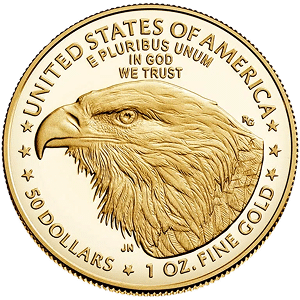
The American Gold Eagle, introduced in 1986, is primarily gold but includes small amounts of silver and copper for added durability.
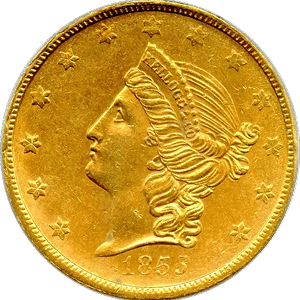
The 1854 Kellogg $20 coin, born from the California Gold Rush, is a rare collector’s piece and a notable part of American history.
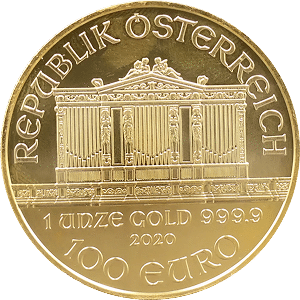
The Austrian Gold Philharmonic, first minted in 1989, was created to honor the Vienna Orchestra—reflected in its distinctive musical-themed designs.
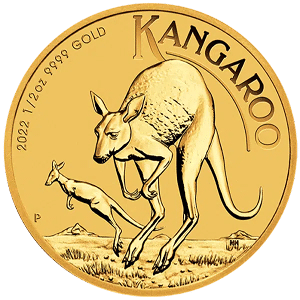
The Australian Gold Kangaroo, first introduced in 1986, is widely regarded as a benchmark for craftsmanship and quality in modern bullion coins.
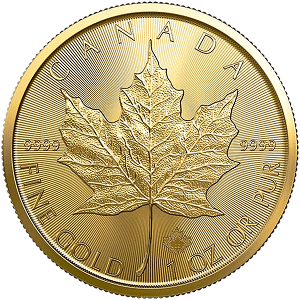
The Canadian Gold Maple Leaf is among the world’s purest coins, featuring 99.9999% gold—and even higher purity in special editions.
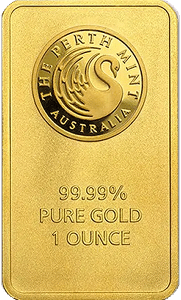
If the remarkable beauty of the Perth Mint 1oz Gold Bar does not first attract one, the security and authenticity feature is sure to make one’s head turn.